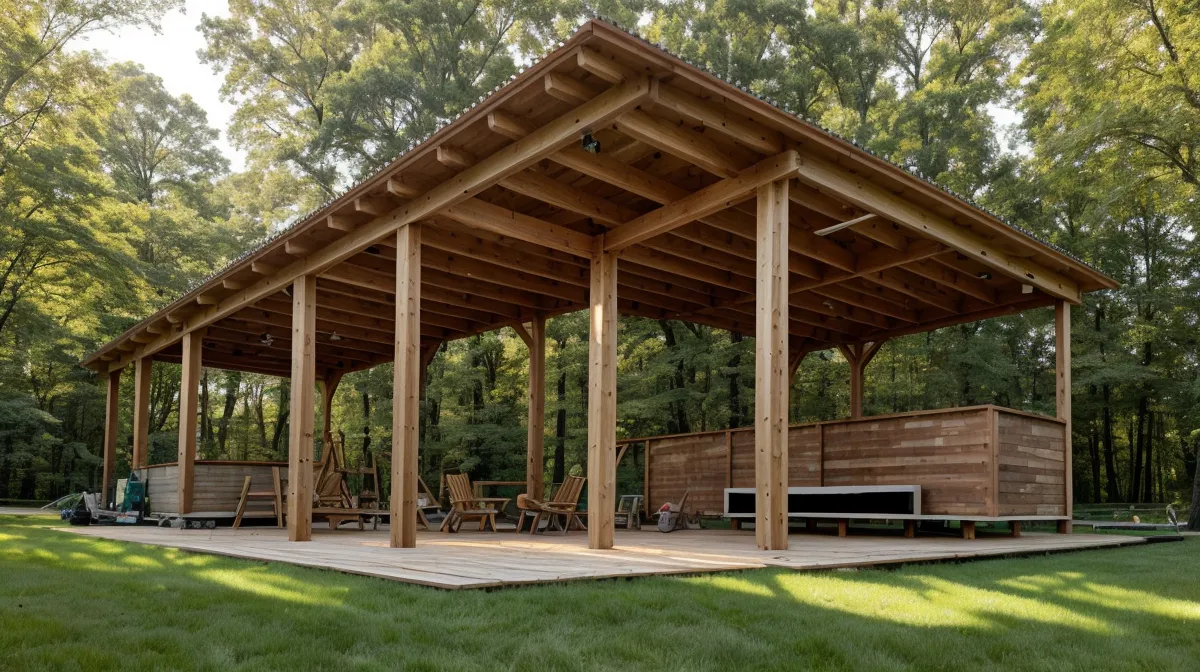
Two Adirondack chairs are drying in the shade next to the workshop, and neither one cost anywhere near what the store charged for a single wobbly-armed model. That's the short version of this DIY furniture project: better outdoor living seating for less, built from real woodworking plans instead of guesswork, which is pretty much the whole budget homesteading philosophy around here.
Quick disclosure before we get into it — this post contains affiliate links, and if you buy through one we earn a small commission at no extra cost to you. We only point you toward plans and tools we've actually used on our own builds, chairs included.
This whole thing started because we needed real seating for our newly finished raised deck — no permit hassle for furniture, unlike the deck's footprint itself, which is a whole different story. Two flimsy folding chairs were not going to cut it for actual evenings out there.
The retail version we almost bought had a nice enough shape to it — curved back, sloped seat, the classic Adirondack chair silhouette everybody recognizes. Touch the armrest, though, and it flexed like it was already halfway to the burn pile. Who spends real money on a chair that wobbles before you've even sat down? We did some quick math standing right there in the aisle and walked out without one.
Store-Bought Comfort vs. Backyard Stubbornness
Building our own meant admitting neither of us has freehanded a curved chair back before, and eyeballing a sloped seat is a fast way to end up with a very expensive pile of firewood. So we bought into a plan library instead of guessing — TedsWoodworking turned out to be enormous, something like 16,000 plans covering everything from pergolas to gazebos, which is honestly a little overwhelming until you find the one folder you actually need. The "Classic Adirondack" plan came with a real cut list, which meant one trip hauling lumber instead of three.
On the way back from a Saturday run out to Pittsboro Farmers Market in Chatham County, we swung through for the lumber, and I kept thinking about our very first outdoor build, years back, when we grabbed the cheapest pressure-treated posts off the rack without a second look. By the end of that first summer, every single one had warped into a banana shape. We sort through the stack ourselves now, board by board, no exceptions. Patrice, a friend from the neighborhood Facebook group, showed up that afternoon with a cooler she absolutely did not need to bring, took one look at our sorting pile, and asked if we were building chairs or running a science experiment.
Why We Passed on Cedar for Pressure-Treated Pine
Most plans and most people will tell you cedar is the only real option for outdoor furniture — it resists rot better than untreated lumber and looks the part sitting on a deck. We're not about to relitigate treated versus untreated lumber here, that debate belongs somewhere else entirely, but for two chairs meant to survive a Piedmont summer, premium cedar would have pushed the whole project past what we were willing to spend. So we went with high-quality pressure-treated pine instead, picked board by board for straight grain, no cupping, no loose knots anywhere near the seat brackets.
A lot of people hate on PT lumber for furniture because it looks green and cheap fresh off the rack. Fair complaint, honestly — ours looked a little swampy too, until the final coat went on. We checked every seat bracket for square before driving a single screw, because a chair that's out of square doesn't just look wrong, it rocks wrong, and there's no fixing that after glue-up.
Woodworking Plans vs. Winging It
Chairs don't need footings dug down past the frost line the way our shed project did — small mercy, since digging in Piedmont clay is nobody's favorite Saturday. What they do need is a back support cut at exactly the right taper, and that's where we almost blew it. I got cocky and tried to eyeball the angle instead of tracing the actual template, the same way you'd wing a recipe instead of measuring the flour. Three miscut boards later, feeling like a total amateur, I finally traced the template like the plan told me to in the first place.
We hauled the pieces over to the workshop project — still only three-quarters closed in, OSB nailed up on two sides and a blue tarp standing in for a wall on the third — because that's where the outlets are and there's a roof over our heads when the sky opens up. She pointed at the PDF diagram on the tablet, made me trace the template properly, and the pieces clicked together like a heavy wooden puzzle once I stopped trying to be a hero about it. That's the whole case for solid plans in one sentence — they protect you from your own ego.
Where the Store-Bought Chairs Still Have an Edge
Credit where it's due — if you need somewhere to sit THIS weekend and you own zero tools, the store wins every time. No sanding, no staining, no Saturday lost to a miscut board. Buying also skips the fastener math entirely, and that math matters more than people think. Treated wood eats cheap screws alive — the tannins react with plain metal and leave ugly black streaks bleeding down the side of the arm rail. We spent a little more on stainless deck screws, and it turned out to be the cheapest insurance on the whole build.
By the time we got to the final coat of solid stain, the green tint was long gone, and the pressure-treated wood underneath had a UV barrier that keeps it from checking and cracking under a Carolina sun. I still think about pulling open the cold frame lid on a raw February morning a while back, half expecting frozen mush, and finding the seedlings inside green and stubborn instead — that's the bar I hold anything I build to now. It has to survive weather I didn't plan for, not just the weather I hoped for.
Buy Retail or Build It Yourself: How We'd Decide Now
So here's where we've landed on it. Buy the retail chair if you need seating now, you're short on a free weekend, or you genuinely don't want another project competing for garage space — there's no shame in that trade. Build your own if you've got a weekend or two, a little stubbornness, and you'd rather have chairs sized to actually fit your frame and built for the specific weather your backyard throws at it. For us, that meant chairs wider and sturdier than anything on the store floor, angled just right for watching the light fade over the back pasture.
If you're leaning toward building, we'd point you toward TedsWoodworking again without hesitation — it's the same library that got our dimensions right after our own eyeballing went sideways, and the cut lists alone are worth it if lumber-aisle guesswork isn't your idea of a fun Saturday. Whether the next project is a chair or you finally get around to that backyard shed you keep talking about — My Shed Plans covers that ground if a 16,000-plan library feels like overkill for one building — having an actual plan is the difference between a weekend win and a pile of expensive scraps. Now if you'll excuse us, we've got two new chairs and cold drinks with our names on them.