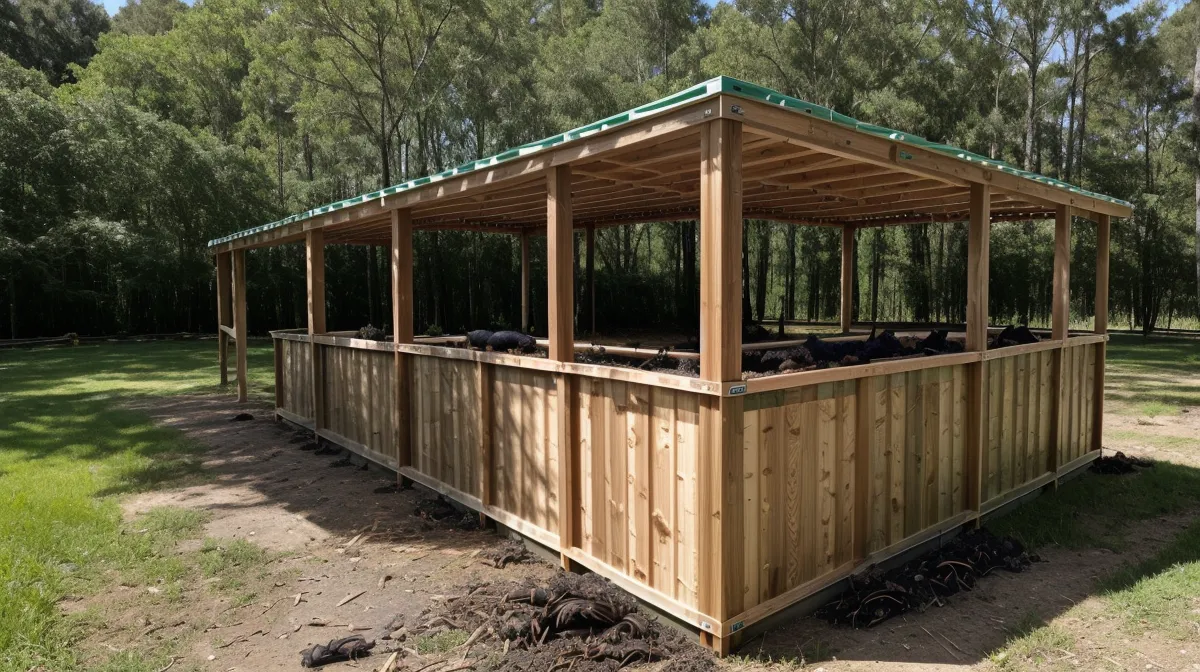
At forty-eight by forty inches, that's the footprint of every bin in the three-bin composting system we finally built behind our workshop, and the only reason we landed on that number is that it matches a standard pallet. We weren't chasing a science project. Our old plastic bin had been buried under oak leaves again this fall, and if we wanted our backyard garden beds to actually benefit from better soil health come spring, something bigger had to happen on this homestead. Readers ask us some version of the same handful of questions every time we post about a build like this one, so instead of another play-by-play, here's the honest question-and-answer version.
Do You Actually Need Three Bins for a Homestead Garden?
Short answer: probably not, unless you're generating the volume we are. A three-bin composting system works because it gives you a stage for fresh material, a stage where things are actively breaking down, and a stage of finished compost ready to go on the beds. One bin can't do all three jobs at once without you constantly digging through half-finished material to reach the good stuff underneath.
We'd learned on bigger builds that skipping an actual plan costs you more time than it saves, so this one started life as a sketch on the back of a lumber receipt instead of nothing at all. Basing the bins on pallet dimensions wasn't clever engineering; it just meant we could measure against something that already existed instead of guessing at a size.
Red Clay, a Quartz Rock, and a Stubborn Post
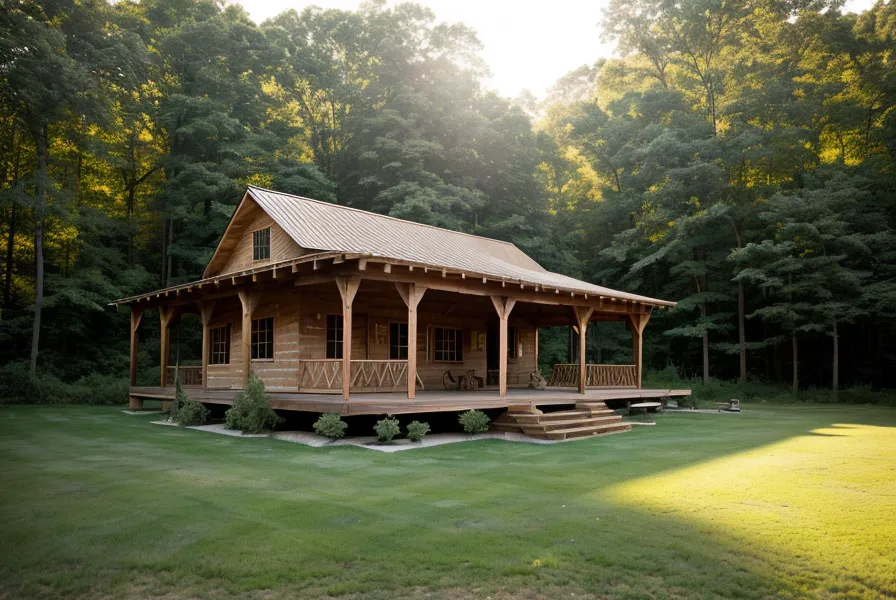
North Carolina red clay never fully freezes; it just turns into something closer to peanut butter, the kind that clings to your boots and refuses to let go of a post-hole digger. The first two holes went fine. The third one hit a rock roughly the size of a microwave, buried deep enough that neither of us saw it coming until the digger jumped back and rattled straight up through both our arms.
Patrice showed up that Saturday the way she always does, cooler in hand before either of us had asked for help, and ended up flat on her stomach with a pry bar working the rock loose from underneath while we levered from the top. A compost bin doesn't need the kind of real structural footings a shed does; you just sink the post and move on, which is the only reason we didn't call it quits and pour concrete instead. Getting everything perfectly square, level, and plumb is its own rabbit hole, one we've gone down in detail on a different post, but for a compost bin, close enough held up fine.
We Almost Skipped the Cedar Siding Altogether
Hardware cloth, that heavy wire mesh you'll find hanging in rolls near the fencing at Tractor Supply Co. in Siler City, was the cheaper, faster option, and for a while it was winning. Cedar cost more and took longer to cut, but it was going to hold its shape for years instead of sagging under wet leaves by spring.
Cedar won for the outer walls. The partitions in between still needed to breathe, though, so we kept those open enough to encourage aerobic decomposition; basically, letting air move through the pile so it doesn't turn into a swampy, anaerobic mess. We didn't rehash the whole pressure-treated-versus-untreated debate for this build either; that's its own argument for another day, and we just used what was already stacked under the tarp by the workshop.
Hiring Help Without a Plan Cost Us More Than It Saved
Somewhere around bin two, we got tired and tried to buy our way out of the grunt work. A guy from a neighborhood post agreed to a day of labor to help finish the framing while we handled a work deadline. We never wrote down a scope, just a vague "help with the compost bins" text, and by lunch he was building the partitions HIS way while we'd pictured something else entirely. The project sat half-framed for a week until we came back out and finished it ourselves.
Unlike our raised deck, nothing about three plywood-and-cedar bins trips any permit thresholds in our county, so at least that part of the process stayed simple. The lesson wasn't about the county, it was about us. If we're not going to write down what we actually want before someone else touches the project, why would it ever come out the way we pictured it?
Turn a Measuring Mistake Into a Better Design
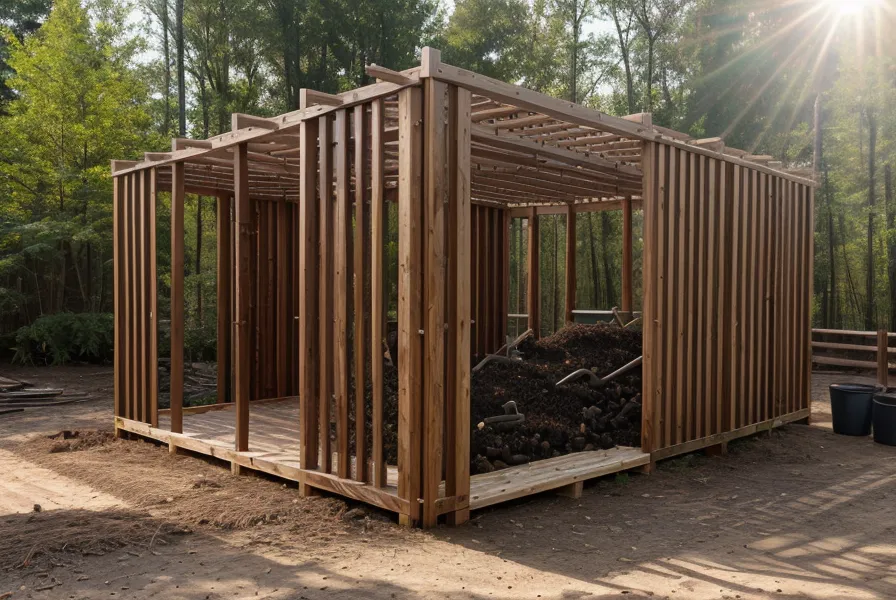
She handles the planning and he handles the power tools, except when the middle partition boards came out three inches short and both roles collapsed into pure troubleshooting. Scrap wood left over from our DIY outdoor trash can enclosure build ended up solving the problem better than the original plan would have.
Instead of a fixed front wall, those scraps became removable slats that slide into channels, so shoveling out finished compost from the bottom doesn't mean climbing over a wall first. It's the same instinct that shaped our DIY root cellar: the fix for a mistake mid-build is sometimes better than what you would have built on purpose.
Is a Three-Bin System Overkill for a Small Yard?
For a quarter-acre lot with two or three raised beds, yes, probably. Turning three cubic yards of wet, heavy material by hand is a genuine workout, and if you're not generating that much yard waste, you'll burn more energy moving the pile than you'll ever save waiting for it to break down. Think of it like meal-prepping for eight when you're only cooking for two, the system only pays off at a certain scale.
On our half-acre, with a leaf drop that buries the lawn every November, it sits right on the edge of worth it. We don't turn it on a weekly schedule like the composting purists recommend, we turn it when the weather cooperates or the guilt builds up, the same loose approach we finally brought to storing wood for winter once we stopped overthinking that system too.
How Do You Know the Compost Is Actually Working?
Forget staring at the bin for signs of progress, check the garden instead. Last November we walked past the raised beds expecting frost-killed rows and found the kale in the bed we'd top-dressed with our own compost was STILL pushing out new leaves while everything around it had gone soft and dark. That's the tell. Not steam, not a thermometer, not a chart, a plant that keeps growing when it has no business growing.
A reader named Wanda Telfair wrote in after our chicken coop post asking whether the A-frame design would hold up through an ice storm, a different project entirely, but the same question underneath it: does the thing you built actually keep working once you stop watching it? For compost, our answer is to judge it by the bed, not the bin. If nothing around it seems to be benefiting, the system needs adjusting before you go build a bigger version of the same problem.