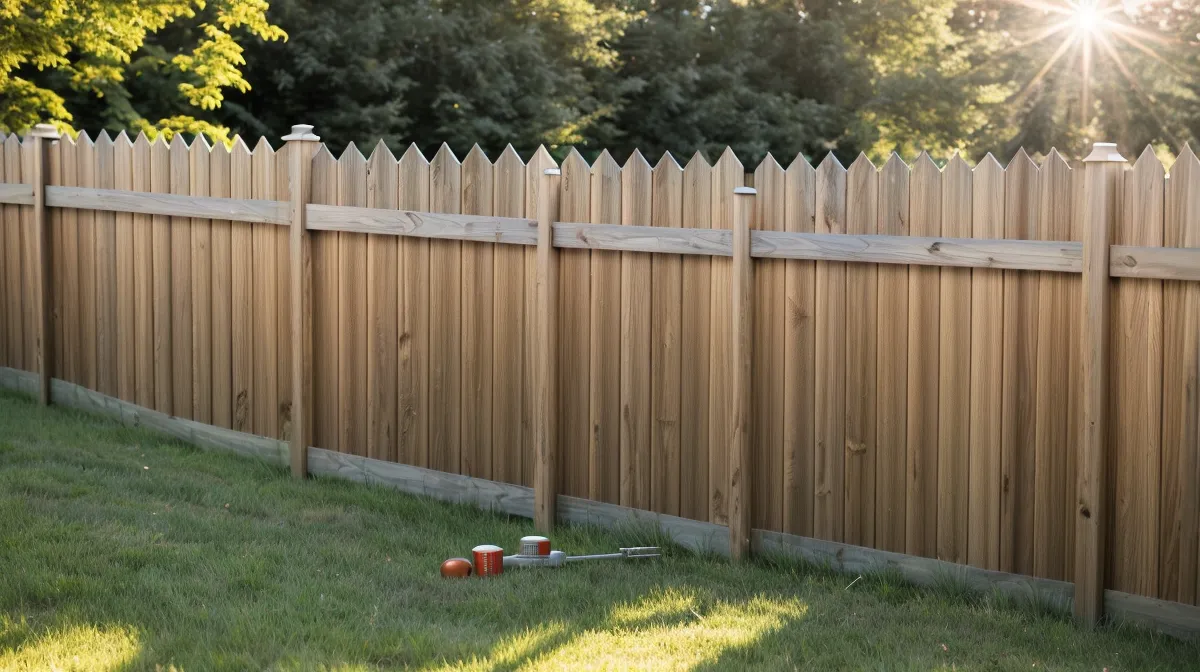
We didn't know how many fence posts it would take to wrap a half-acre backyard in North Carolina red clay, and that blind spot turned a simple DIY fencing idea into a months-long comparison of wood species, gate hardware, and two competing post-hole methods before a single 4x4 went into the ground. Five years into turning this Piedmont half-acre into an ongoing woodworking project, one section at a time, we've learned that picking the right material usually matters more than picking the right tool.
The dog forced our hand, if we're honest about it. He'd found a gap in the tree line at the back of the lot and taken to escorting the neighborhood squirrels well past the property markers, and after the third disappearing act in a week we stopped debating whether we needed a boundary and started debating what kind. Fences under a certain height don't trigger a permit review in our county — a relief, since permit thresholds on a different build cost us real time we didn't have here.
Three contractor quotes later, we had our answer anyway. The lowest bid for labor alone on a wood picket fence this size came in higher than either of us expected to pay for anything with wheels, and that number did more to turn us into first-time fence builders than any inspiration board ever could. So we picked our first real battle: pressure-treated pine against cedar, argued out at the lumber yard counter instead of settled in some contractor's estimate.
Pressure-Treated Pine or Cedar: What Actually Belongs on a Half-Acre Fence?
Shane Cottle, who works the counter at our county lumber yard and has texted me every time cedar goes on clearance since he recognized us mid deck-build a couple summers back, was skeptical the moment I told him we wanted this fence done in a weekend. He didn't say much, just the kind of look he gives anyone who describes a fence project in singular-weekend terms, and pointed us toward the pressure-treated stack instead.
Cedar carries natural oils that resist rot and insects without any chemical treatment, and it weathers to a silver-gray that pressure-treated lumber never quite manages on its own — that part of the pitch is true. But cedar for 593 linear feet of fence costs meaningfully more, and it's softer, which matters when your dog treats every post as a scratching post. Pressure-treated pine gets forced under pressure with preservatives rated for ground contact, and it will outlast cedar buried in soil, even though it needs a stain or sealant to look intentional instead of industrial.
We split the difference the way you'd budget for a kitchen remodel — spend where it shows, save where it doesn't: pressure-treated pine for every post buried in the ground, cedar for the pickets facing the street where nobody's dog is scratching on them and the weathering color actually shows. It's not the purist's answer, since a fence probably should be one material end to end, but it solved for cost and durability in the two places that actually mattered.
Getting the Line Straight Before Any Wood Goes In
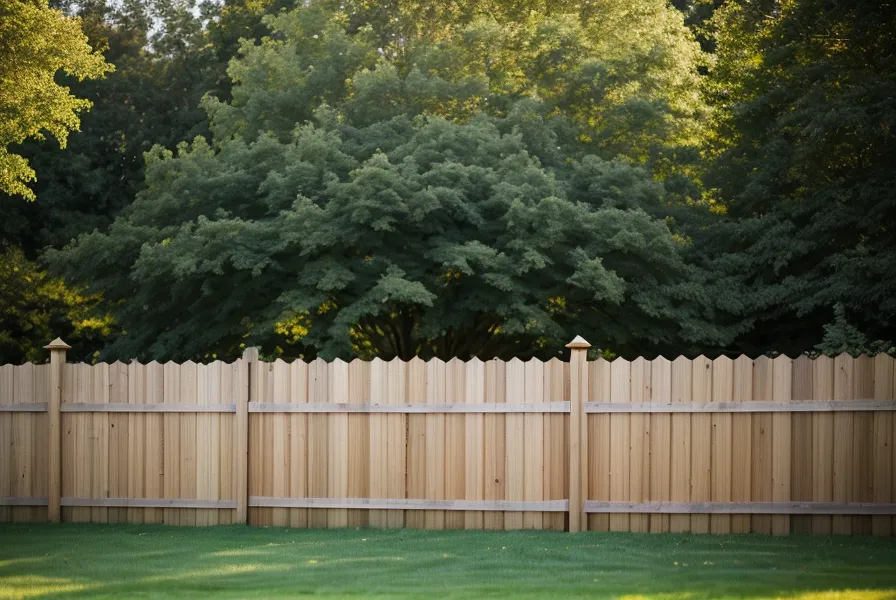
Before anyone touched a shovel, the masonry string went up first, and it sagged an inch in the middle over just fifty feet the first time we pulled it, which meant every post already flagged was wrong. Working from an actual plan instead of winging the layout, the way we used to before we learned better, kept us from repeating that mistake across the rest of the 593-foot perimeter — the same lesson footing work taught us on the shed we built from real drawings instead of a rough sketch.
Utility flags went in before any of that mattered, through the 811 service, since severing a line under half an acre of clay wasn't a risk worth the shortcut. She reset the string once the yard was marked, checking it with a level every ten feet instead of trusting her eyes the second time around.
Racking Versus Stepping on the North Carolina Slope
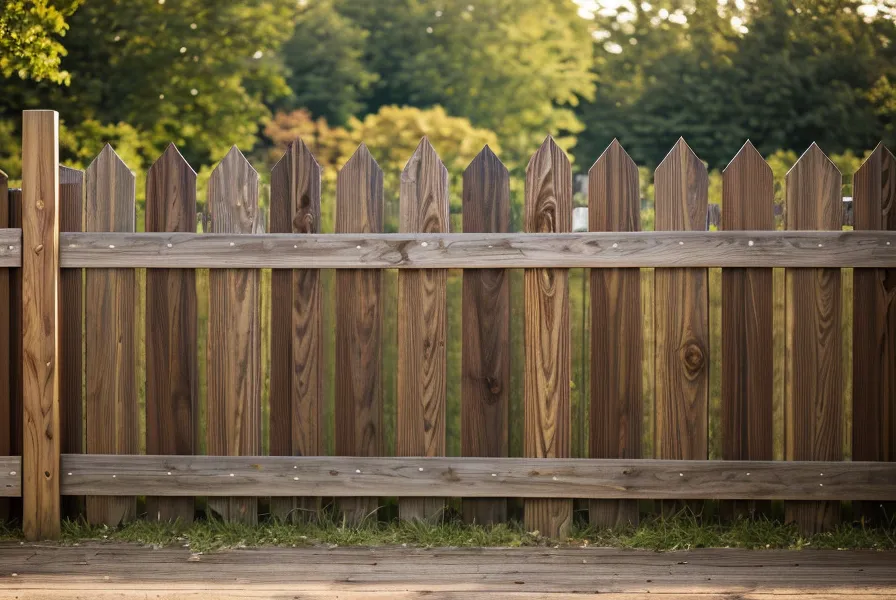
The back corner of the lot drops about three feet over twenty feet of ground, and that grade change forces a choice every sloped fence eventually runs into: racking or stepping. Racking lets the fence follow the slope, so the pickets stay vertical but the top rail runs at an angle the whole way down. Stepping keeps every section level and drops the next section like a stair tread, which costs more precision in the layout but keeps the classic picket silhouette intact.
We chose stepping, mostly because pre-cut pickets don't rack cleanly without a lot of extra trimming, and getting those steps uniform took the same careful, checked-twice measuring we'd already been forced to learn after cataloging our own worst measuring mistakes in this county — square, level, and plumb, confirmed before a single screw went in rather than after. Racking would have been faster. Stepping looks like it was always supposed to be there.
Two Post-Hole Methods, One Very Different Saturday
Twelve of those post holes got dug with a manual clamshell digger before we admitted defeat, one humid morning after a night of rain had turned the clay into something closer to wet cement. It closed around the digger's jaws like a fist every time we pulled it back out, cold and heavy in a way no amount of arm strength was going to out-muscle. We'd walked enough of the red-dirt trails at Jordan Lake State Recreation Area over the years to know this soil holds water, but knowing that and standing in it with a hand tool turned out to be two very different kinds of knowledge.
A rented power auger showed up the next morning and finished the remaining holes in roughly the time it had taken to dig four by hand. That's the honest version of the story people tend to leave out of the highlight reel — the tool you rent on day two, not the one you triumphantly buy up front. Jonas Breedlove, from our county's DIY Facebook group, messaged us about that exact swap a few days later, thrilled the way he always is about other people's projects, already planning to rent the same auger for his own gate posts.
Steel Hardware Beats Standard Lag Bolts at the Gate
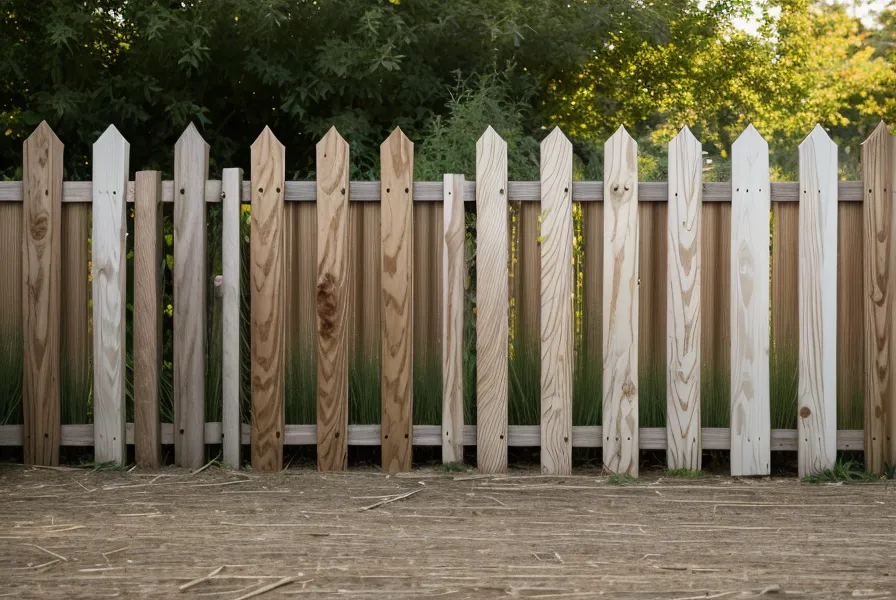
Most gate tutorials show hinges lagged straight into a 4x4 post and call it finished, and for a while, that's exactly how ours looked too: finished. Wood moves. It shrinks and warps a little with the seasons, and a heavy picket gate swinging on lag bolts alone will eventually pull the post just enough that the latch stops lining up, which means lifting the gate with a knee to close it.
Steel mounting hardware solved it: a metal frame the pickets bolt to, which then bolts through the post with far more surface area resisting that pull than a couple of lag screws ever could. It costs more than skipping straight to lag bolts, and it takes longer to install correctly, but it's the difference between a gate that still swings true after a few winters and one that needs re-hanging every spring.
Which Fence Would We Build Again?
Every comparison in this build came down to the same trade: spend more up front in money or time, or spend more later re-doing the same section. Pressure-treated pine for anything buried, cedar only where it's seen and safe from teeth. Stepping over racking on real slope, even though it's slower to lay out. A rented auger the moment the clamshell digger loses the fight. Steel hardware at any gate meant to swing for years instead of one season.
The morning we set the last picket, the line ran the full 593 feet arrow-straight from the road to the back corner, without a single post leaning off plumb, a genuinely satisfying thing to walk after months of weighing every option along the way. If we had to fence the half-acre again, we'd make the same trades in the same order. That's the part worth remembering more than which afternoon we finished.