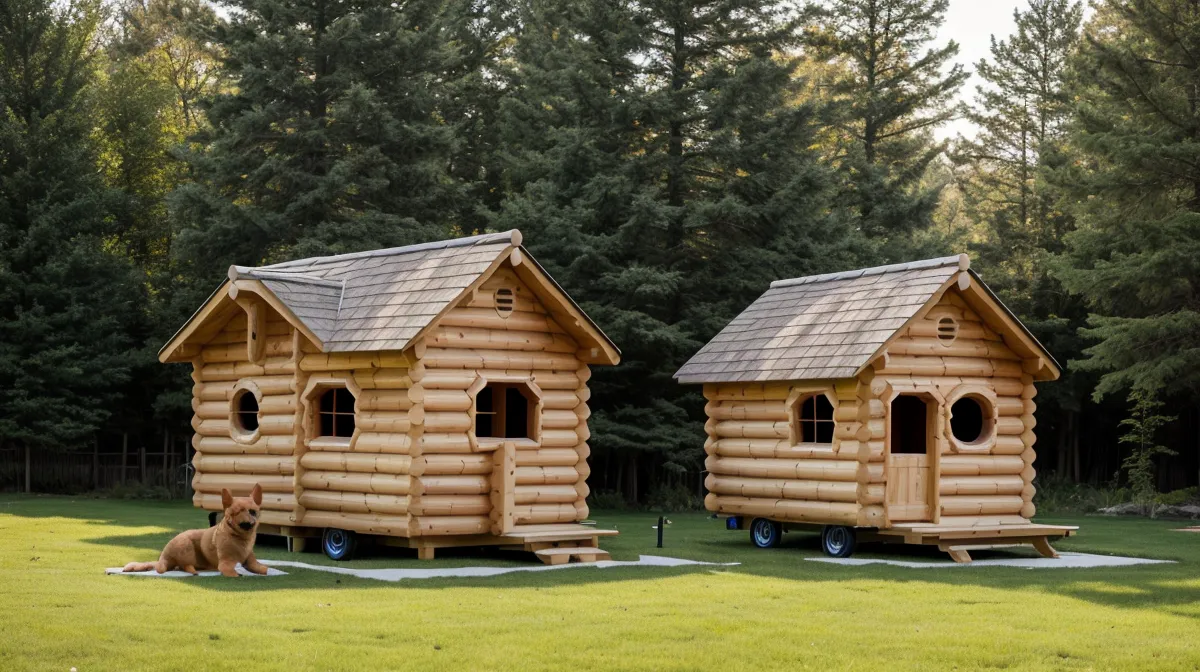
Sixteen thousand. That's roughly how many woodworking plans sat in a library we'd been avoiding for two years, half-convinced that following someone else's blueprint wasn't real backyard DIY. Five years into building things ourselves (a shed, a lopsided pergola, half a workshop that's still not finished), we'd managed every outdoor structure on pure stubbornness and a folding ruler. This dog house was supposed to be another budget-building win we sketched ourselves. Instead it turned into the project where we finally admitted our system was broken.
Quick disclosure before we get into it: a couple of the links below are affiliate links, and if you buy through one we earn a small commission at no extra cost to you. We only link to plans we've actually bought and used ourselves, mostly to stop repeating the mistakes below more than once.
Eyeballing vs. Reading the Plan
Picture red clay mud, a dog who'd clearly rather be back on the trail at Chatham Mills, giving us the "why am I still outside" look, and one of us trying to sketch a roofline on a scrap of OSB — like structural angles could be eyeballed the same way you eyeball a pinch of salt. You CANNOT eyeball structural angles. We'd already learned that once, the hard way, on the deck: we skipped a plan, eyeballed the frame instead of squaring it properly, and the whole thing came in three inches out of true across a twelve-foot span. That's not a rounding error. That's a floor that never sits flat under anything you put on it.
What Guessing Actually Costs You
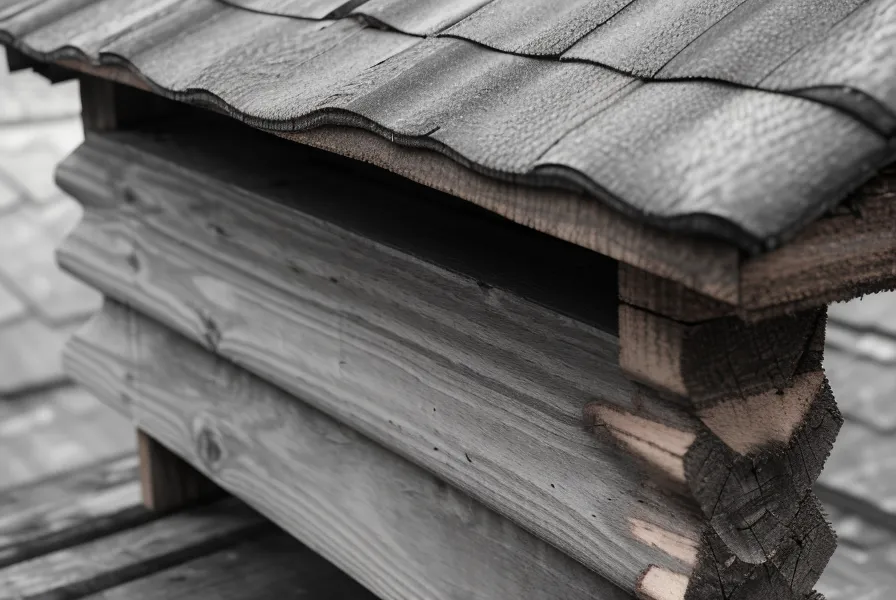
Getting a frame square, level, and plumb is the whole game, and it's a skill neither of us has fully mastered — we've written about our worst framing mistakes before, and this dog house nearly joined the list. Every miscut rafter meant another drive for replacement lumber, and in our part of the NC Piedmont you can't grab whatever's cheapest off the rack — anything that lives outside year-round needs pressure-treated lumber rated for ground contact. That's when we finally looked at TedsWoodworking instead of sketching another disaster on scrap wood.
Shane Cottle, who works the counter at our lumber yard and somehow always knows which delivery has the straightest boards, texted us when a batch of treated 4x4s came in without the usual warp. We bought extra out of habit. Humidity punished us anyway — one board we cut and left leaning against the fence overnight had swollen about half an inch by morning, no longer fitting the gap it was cut for. Lesson: in this climate, you cut and assemble the same day, or you start over.
None of this needed footings, unlike our shed, and a structure this size doesn't come close to the square footage where the county starts asking about permits — small mercies. But three trips back to the store for lumber we'd already bought once made "winging it" feel a lot less charming.
Do You Need 16,000 Woodworking Plans for One Dog House?
Short answer: no. You need exactly one plan that fits your situation, but wading through that library to find it was worth it. There are more than 16,000 plans in there, everything from garden arbors to full outbuildings, and the dog house section had a detail neither of us would've thought of — an offset entrance that keeps wind and rain from blowing straight into the sleeping area. We matched the roofline's pitch to our own shed's, too, because even a dog house benefits from a real plan when the goal is visual consistency across the yard.
What actually saved us money was the cut list. For the first time in this yard's history, we walked into the store with a list that matched what we needed instead of guessing at six boards or seven. The plan also specified vent gaps sized for our summers, which we would've just guessed at otherwise — zero wasted plywood, because every cut was laid out before the saw ever touched a sheet.
Half an Acre Versus a Charlotte Balcony
Jonas Breedlove — who comments on nearly every post in our county DIY Facebook group and photographs every step of his own builds but somehow never finishes writing one up — asked whether the same plan would work for a friend's balcony dog house in Charlotte. Good question, because the two jobs aren't remotely the same animal.
Our build assumes dirt: post anchors, ground-contact lumber, enough weight to survive a Piedmont thunderstorm without sliding. A balcony assumes the opposite — light materials, anchoring that doesn't puncture a rented floor or violate a lease, and a frame that won't stress a structure that was never built to hold extra weight. Nobody bolts a solid cedar house to a fourth-floor railing and calls it a day. Inside that same plan library, though, there was a smaller design in thinner plywood with an interlocking frame instead of lag bolts — proof that a huge plan library matters less for its size than for whether it holds the one plan that fits your actual constraints.
Picking the Approach That Fits Your Yard
So when does winging it still make sense? Honestly, for anything small, low-stakes, and forgiving of a wonky angle (a compost bin, a plant stand), eyeballing it is fine, and we still do it. But for anything that has to keep an animal dry, survive a Piedmont winter, or carry real weight, pull a real plan first. It's the difference between recutting a board three times and cutting it once.
I noticed the difference firsthand the afternoon our pergola's shadow lined up dead straight across the patio boards: the first time anything we'd built landed square without us forcing it there. We finished this whole build in a single weekend, a small miracle after our three-weekend shed saga. We've since started flipping through TedsWoodworking again for the workshop we keep half-finishing, and we've bookmarked My Shed Plans's 12,000-design library too, since a shed-focused set of blueprints is a better fit for that particular project. If you're standing in the mud arguing with your own sketch right now, go find the plan first. Your dog will forgive you either way. Your lumber budget won't.