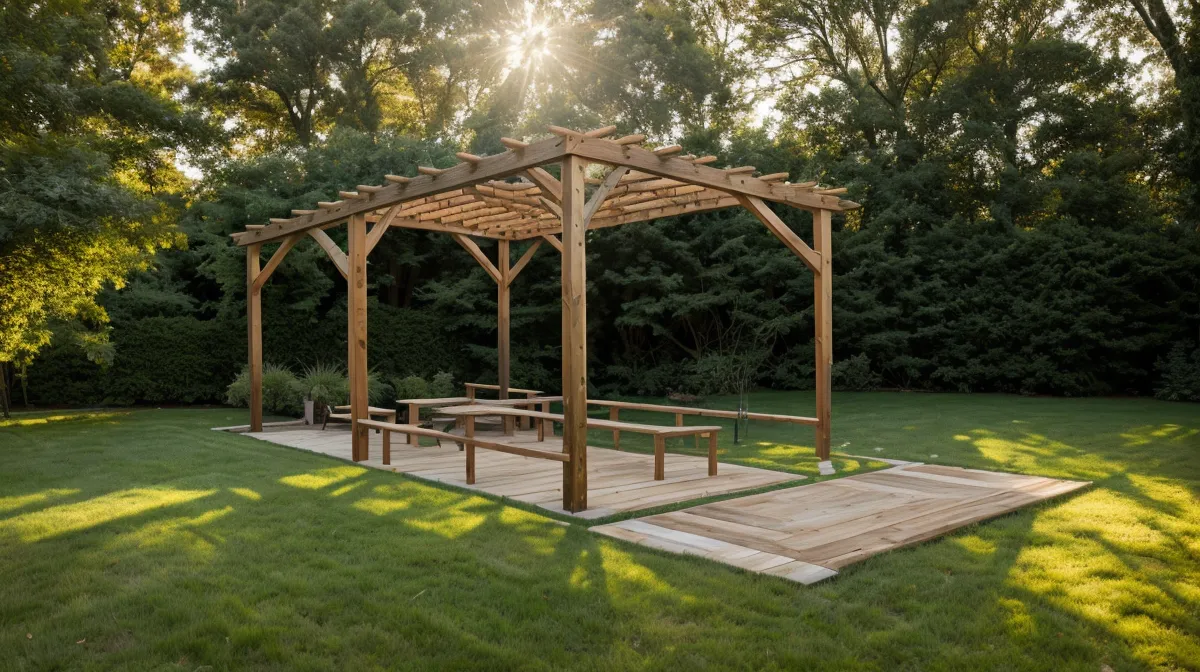
A Garden Trellis Isn't Decoration; It's a Structural Post
She: Our first trellis folded flat under one rain-soaked jasmine vine, with no storm needed, just North Carolina humidity and gravity doing their usual thing. That's the myth right there: people treat a garden trellis like it's decoration, a pretty lattice you screw together on a Saturday afternoon for climbing plants to lean against. It's NOT decoration. Any outdoor structure built to carry a vine is a structural post first, and the vine only gets heavier every year it climbs.
He: We're not carpenters, and most of what we know about backyard woodworking we've picked up finishing one project after another around this half-acre. But we'd already lost one trellis to cheap plastic, and we weren't buying a second. So we grabbed leftover cedar from a stack that's been sitting by the workshop for months and decided this one would actually get built to last.
She: I sketched the grid on the back of an old flyer before we bought a single board, a tight diamond pattern that looked great on paper. His first comment at the lumber counter was that the boards never measure what the tag says. He's right, and it's worth knowing before you plan anything with tight spacing: a "two-inch" board runs narrower than that in real life, so build slack into your design instead of finding out mid-cut.
Cedar Doesn't Need to Be Thick to Be Strong
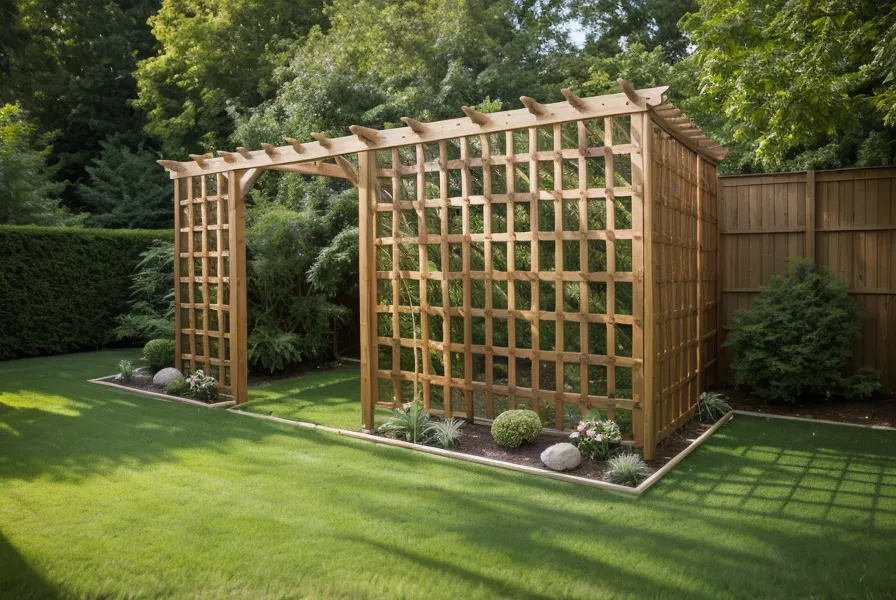
He: Cedar pushes back against rot and bugs on its own, thanks to natural oils in the wood, which is why we picked it over the leftover pine from the deck build. But it's soft, and once it's ripped down into thin slats it turns brittle fast. We expected "soft" to mean "forgiving." It means the opposite once the wood gets thin.
She: We split three good slats before we figured that out. He drove the first screw straight through without drilling ahead of it, and the wood popped along the grain like a cracker. Every screw after that got its own pilot hole first, a hole a touch smaller than the screw itself, just enough that the screw isn't acting like a wedge splitting the board open. Small step, and it's the difference between a slat that holds and one that snaps the day the vine puts real weight on it.
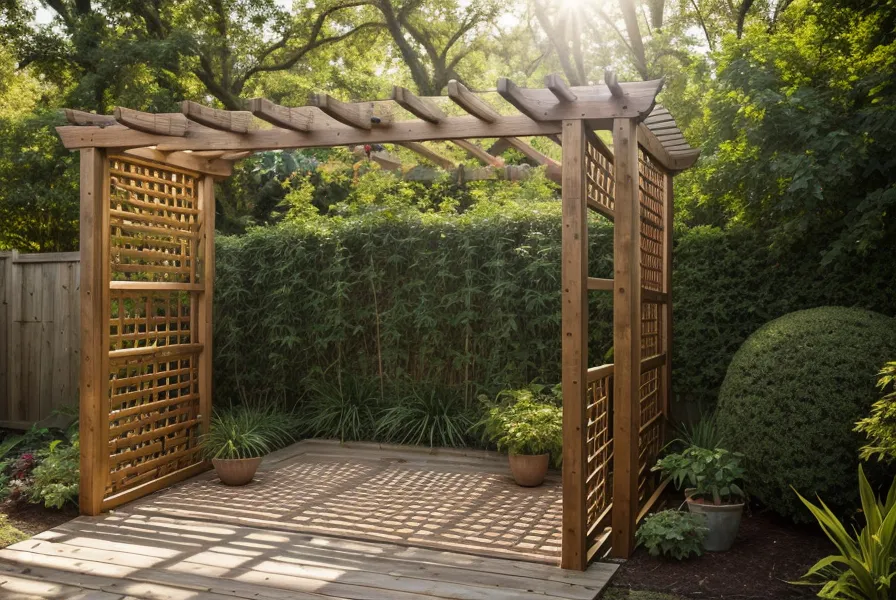
He: Every time the saw cut out there was that half-second where everything goes quiet, ears still ringing, a thin haze of sawdust hanging over the sawhorses before it settled on our shoes. While we assembly-lined the grid we argued about spacing, because plants grab on differently. Thin tendrils, like sweet peas, want narrow slats to wrap around, while twiners like jasmine need something thicker to spiral up. We built ours for the thicker climber since that's what we were replacing, and we used fasteners rated for outdoor use, galvanized at minimum, since anything meant for indoor trim will rust through in one wet season out here.
Why Burying the Posts Kills Them Faster
She: The second myth is the one that gets people two years later: dig a hole, drop the post in, pour concrete around it, done. Sounds simple, so why does the same post always end up wobbly by year three? Even lumber rated for direct soil contact is having a slow argument with the ground it's touching, and the ground wins eventually. Keep any wood you want to last off the actual dirt, full stop.
He: We dug deeper than felt necessary, dropped in enough gravel that water has somewhere to go instead of pooling against the post, and set galvanized post bases in the concrete instead of setting the cedar itself in the hole. That keeps the wood sitting above grade instead of soaking in it. We drove to the Home Depot in Apex twice because the first trip only turned up two of the four bases we needed.
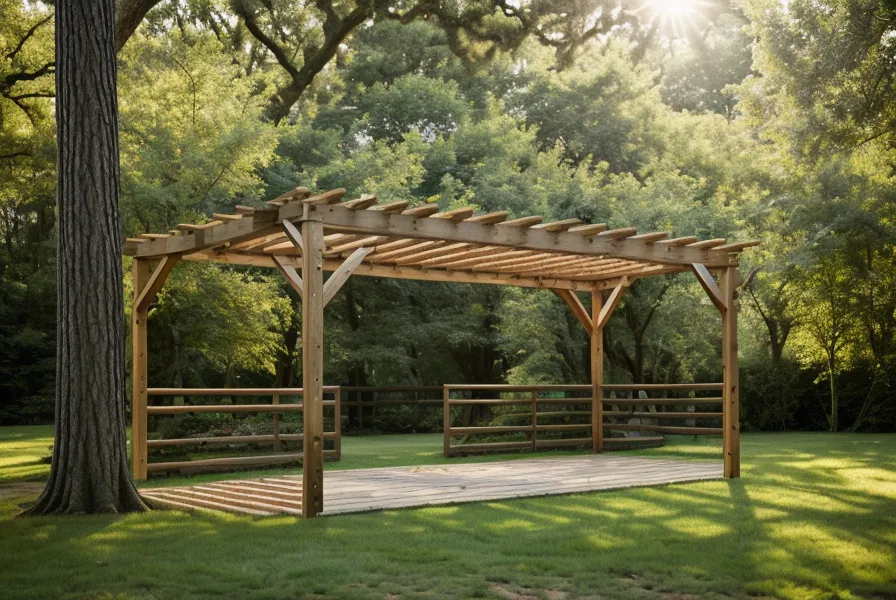
She: Here's the part that didn't work the first time. We poured our first two footings without ever checking how deep the frost actually runs in our part of the Piedmont. Come January, both of those posts had shifted, visibly, out of true. We spent a cold Saturday breaking the concrete back out, redigging well past where we'd stopped the first time, and resetting them properly. Not a fun afternoon, but a lot less fun than watching a loaded trellis lean sideways in March.
How to Tell Your Vertical Garden Structure Will Hold
He: A friend of ours, the kind of guy who hunts deer every November and butchers the meat himself, walked past while we were setting the last post and said we'd built it strong enough to hang a deer from. Not the compliment I was fishing for, but he'd landed on the same point we'd been circling the whole build: trusting a trellis because the wood looks nice is like trusting a car because the paint job is glossy. Looks and structure aren't the same thing, and only one of them matters once the vine doubles in weight.
She: The real test isn't how it looks standing there empty. It's closer to the test we used on a playhouse we built for the kids next door, who sprinted straight for it the first afternoon with nobody needing to promise it wouldn't tip. We watched for the same thing here. Did the jasmine start climbing on its own within days of us anchoring the frame, no coaxing needed? If a living thing trusts a structure before you've said a word about how many screws went into it, you built it right.
He: A few practical things we'd tell anyone building one of these from scratch. Check your frame square and plumb as you go, not just once at the start, because a lean that's easy to fix on day one is a headache once the concrete sets. Work from an actual plan instead of guessing dimensions mid-cut, even a rough one sketched on paper saves you from remaking pieces. And a garden trellis this size generally isn't the kind of project that triggers permit paperwork the way a raised deck can, though it's worth a quick check with your own town. We also borrowed a trick from fixing a sagging gate on our wood privacy fence: a diagonal brace across the frame keeps the whole thing from racking sideways in wind, the same way it stopped that gate from drooping.
The Rule We Actually Build By Now
She: We started this whole habit while building a simple DIY outdoor side table for the porch, and the lesson kept repeating on every project since: keep the wood's feet off wet ground, and check your numbers before the concrete sets. The trellis just made the stakes higher, since a wobbly side table doesn't take a two-year-old vine down with it.
He: Once you start building for the outdoors instead of buying whatever's cheapest at the garden center, you start applying the same two rules to every DIY project after that. We used both again while creating a DIY solar food dehydrator for our homestead harvest, of all things. Strange rabbit hole to fall into, but the backyard's better for it.
She: If there's one rule worth taking from all of this, it's that a trellis isn't finished when it looks straight. It's finished when you've checked it's square, kept the wood off the dirt, and given the fasteners a job they can actually hold. Get those three right and the vine will take care of the rest.