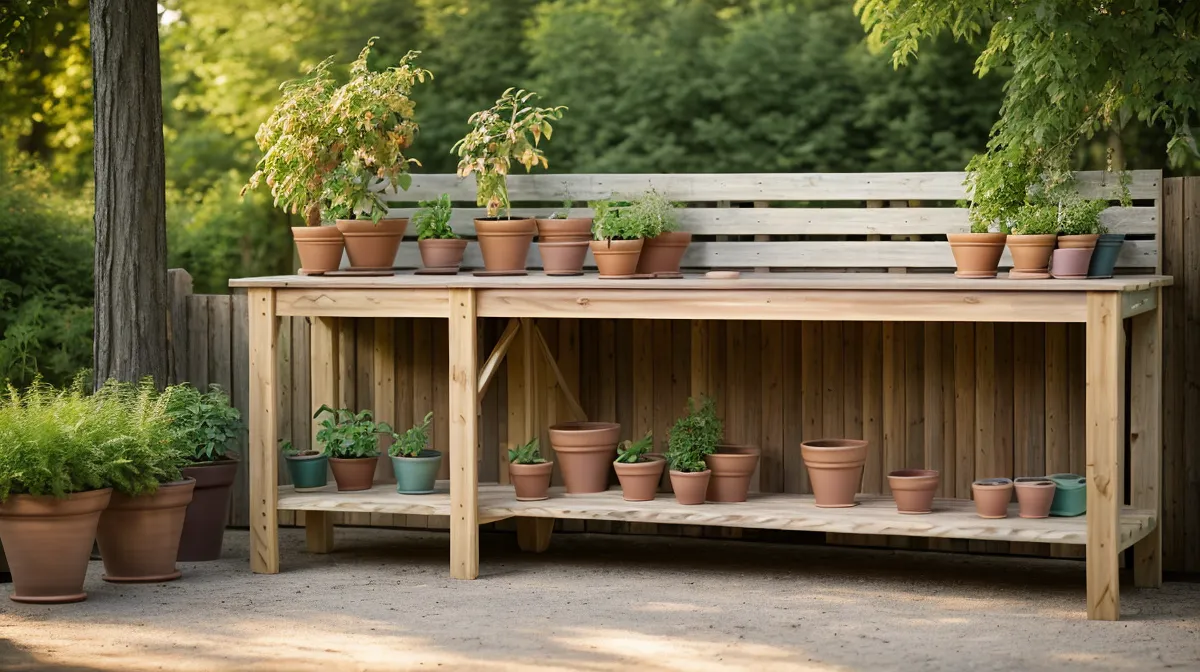
A shed gets blueprints. A deck gets permits and a long argument about frost depth. A potting bench, we figured, just needed four legs and a Saturday afternoon -- no real woodworking plans required. That assumption is exactly what cost us a full sheet of plywood, and it's the myth this whole backyard DIY project ended up correcting: garden organization built on "it's just a bench" logic falls apart the same way anything else does once you skip the math.
We've leaned on TedsWoodworking plans for nearly every structure on this half-acre since the chicken coop, and we'd quietly assumed we could graduate past needing them once a project got small enough. A potting bench felt small enough. It wasn't, and figuring out why took an afternoon we'd rather not repeat.
Here's what the bench actually had to do: hold wet potting soil without racking, survive a Piedmont summer's humidity, and sit level on a lot that slopes more than either of us likes to admit. None of that is complicated engineering. All of it is exactly the kind of thing you get wrong when you treat "small" as a synonym for "simple."
None of this is really about the bench, either. I cracked the cold frame open back in February half-braced for a casualty list, and found every seedling in there still green and stubborn about it -- which meant by spring we had more trays needing a home than any milk-crate system was built to handle, plus a Saturday table at Pittsboro Farmers Market that wanted full flats, not half-dead stragglers.
The "It's Just a Bench" Myth
Every backyard DIY project seems to split into two categories in people's heads -- the ones that obviously need real plans (sheds, decks, anything the county might ask about) and the ones that feel like they don't. A potting bench lands in the second bucket almost automatically. It's furniture, not a structure. Four legs, a top, maybe a shelf -- how hard could that actually be?
Pretty hard, it turns out, once you load it with wet soil and a stack of nursery pots and expect it to survive next to a garden that gets watered by hose spray most mornings. We did NOT think about any of that the first time. We just grabbed a pencil.
Why Small Builds Still Need Real Woodworking Plans
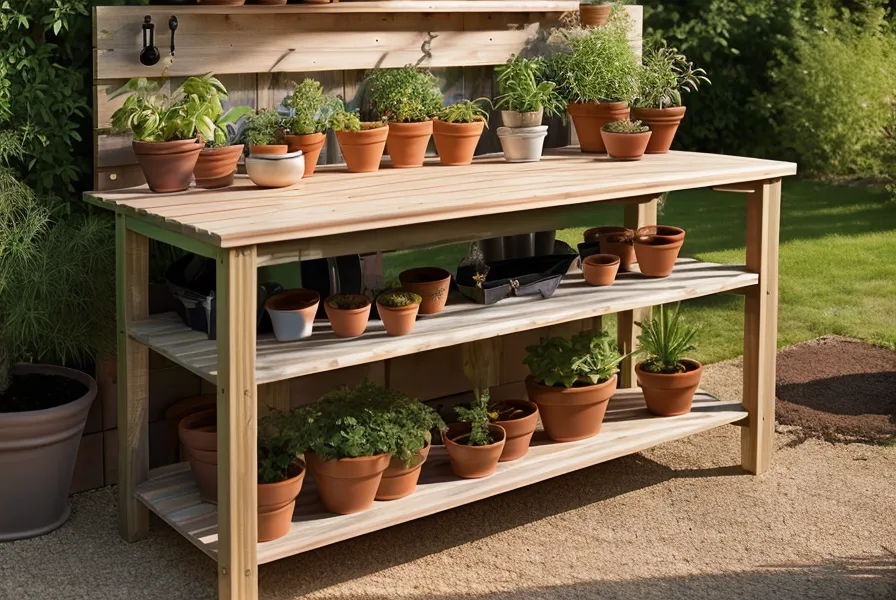
The math on a potting bench is deceptively specific. Wet soil is heavier than it looks, especially once a soil bin and a run of nursery pots are loaded on top, and a frame that isn't braced for that weight starts to rack before the season's out. Bench height matters too -- too low and your back pays for it after twenty minutes of transplanting, too high and you're working with your elbows in the air the whole time. It's a little like assuming a recipe is optional because "it's just flour and water" - technically true, structurally naive.
We already knew what happens when you skip that kind of planning, because 7 biggest DIY failures in rural NC came out of exactly this problem -- a frame that wasn't checked for square before the first screw went in. Same lesson, different project: if a build needs to stay level, square, and plumb over time, eyeballing it is a bet you lose eventually.
So this time we pulled up the plan library instead of a scrap of paper. Somewhere in that stack of digital blueprints was a potting bench sized for an actual human spine, with a materials list that told us exactly what to buy before we made a single cut.
Skipping Plans Cost Us a Full Sheet of Plywood
This wasn't our first attempt at a project like this, either. Before we owned a single set of real plans, we tried to build a smaller version of this same bench off a string of YouTube videos, stitching together three different creators' approaches into something that made sense in our heads and nowhere else. The cut list didn't exist. We were inventing it as we went.
Two wrong angle cuts into a full sheet of plywood later, we had a stack of pieces that fit together like a jigsaw puzzle missing half its edges. Nothing lined up. The shelf brace came out too short, the legs weren't even close to the same length, and we ended up hauling the whole ruined sheet out to the burn pile instead of the garden.
That failure is the reason we don't trust our own eyeballing anymore on anything bigger than a birdhouse. A video can show you how a cut is supposed to look. It can't hand you the actual dimensions for your specific bench, at your specific height, with your specific storage needs, and that gap is exactly where a sheet of plywood goes to die.
Building the Frame With an Actual Materials List
We hauled the cedar back to the workshop at the rear of the property, still only half-dressed, sheathing up on two sides, a stretch of blue tarp standing in for a wall where the weather still gets in on the open end. The deck off the back door has held square through two winters now, so we've learned to trust the plans that got us that far, even while the workshop itself is still very much a work in progress.
Dale next door offered his flatbed trailer for the lumber run, which is how it always goes with Dale - you borrow the trailer, and at some point down the road he collects exactly one favor for it, no more, no less. We've stopped asking what the favor will be. It's always been fair so far.
Ruben, three lots down, showed up with a box of ACQ-rated screws he'd clearly over-bought for his own project - that's just how Ruben operates, buy extra of everything and hand off the surplus to whoever's building something that week. North Carolina humidity chews through regular screws fast, so the extra box saved us a trip we hadn't planned on making.
We skipped the usual pressure-treated-vs-untreated debate for the frame itself -- cedar's natural rot resistance took that argument off the table before it started, which just left the fasteners as the one place humidity could still win.
Cutting the frame pieces went fine until the drill bit caught a knot in the cedar and sent that familiar jolt snapping up through both wrists - the kind of small shock that makes you check the bit is still in one piece before you keep going. We ran a few practice cuts on scraps from the pile against the workshop wall, sorted roughly by length under its own tarp, before touching the real boards, which is a habit we picked up only after wasting enough lumber to know better.
Freestanding Benches and HOA Rules
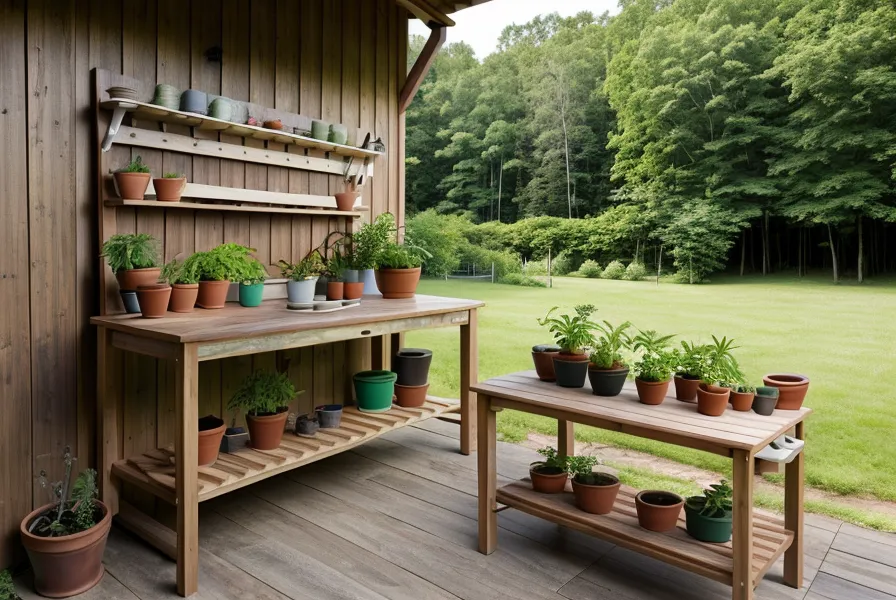
Some of our neighbors are renting, or living somewhere with rules about permanent structures, and they assume that rules them out of building anything like this. It doesn't, necessarily - a potting bench that isn't bolted to the deck or the house siding is just furniture, structurally speaking, no matter how solid it feels once it's loaded up.
That same plan library gave us a freestanding version of the base -- nothing bolted to the deck, nothing anchored into the siding -- built through TedsWoodworking, which matters if you're renting, or living somewhere that gets twitchy about permanent structures in the yard.
The lower shelf does double duty here: it braces the whole frame so the bench doesn't rack side to side under load, without needing a single anchor into the ground or the house. None of this needed footings the way a shed or a deck would - that's a different set of headaches, solved by other projects, not this one. We also didn't run into permit thresholds here, since a freestanding bench doesn't usually trip anything a structure with a roof would -- that's its own rabbit hole for another day.
If you're staring down a bigger structure that might actually need permits -- a shed, a workshop addition, anything with a roof -- My Shed Plans is worth a look; it's built for that scale of project rather than something you could carry to the curb. For us, the general woodworking library covered a bench just fine.
And if what you actually want is less about blueprints and more about turning a yard into something that feeds you -- coops, beds, water catchment, that whole direction -- the Self Sufficient Backyard guide covers that ground better than any single bench plan will. We've paged through it more than once while figuring out what to build next.
The One Rule We Now Apply to Every "Simple" Project
Here's the rule that's replaced "how hard could it be" at our house: if a build has to hold weight, shed water, or stay square for more than one season, it gets treated like a real project - plans, materials list, actual measurements - no matter how small or furniture-like it looks sitting in the backyard. A potting bench qualified. So did the coop. So, probably, does whatever you're eyeing right now.
We still don't always get it right. But why we stopped winging it a while back is basically the whole story here -- plans over guesswork -- and that one shift has saved us more wasted lumber than anything else we've changed about how we build.
If you're staring at some version of your own backyard clutter and wondering whether a project like this is worth the weekend, grab a set of real woodworking plans before you grab a pencil and a scrap of cardboard. It's a smaller investment than a wasted sheet of plywood, and your back will thank you either way.