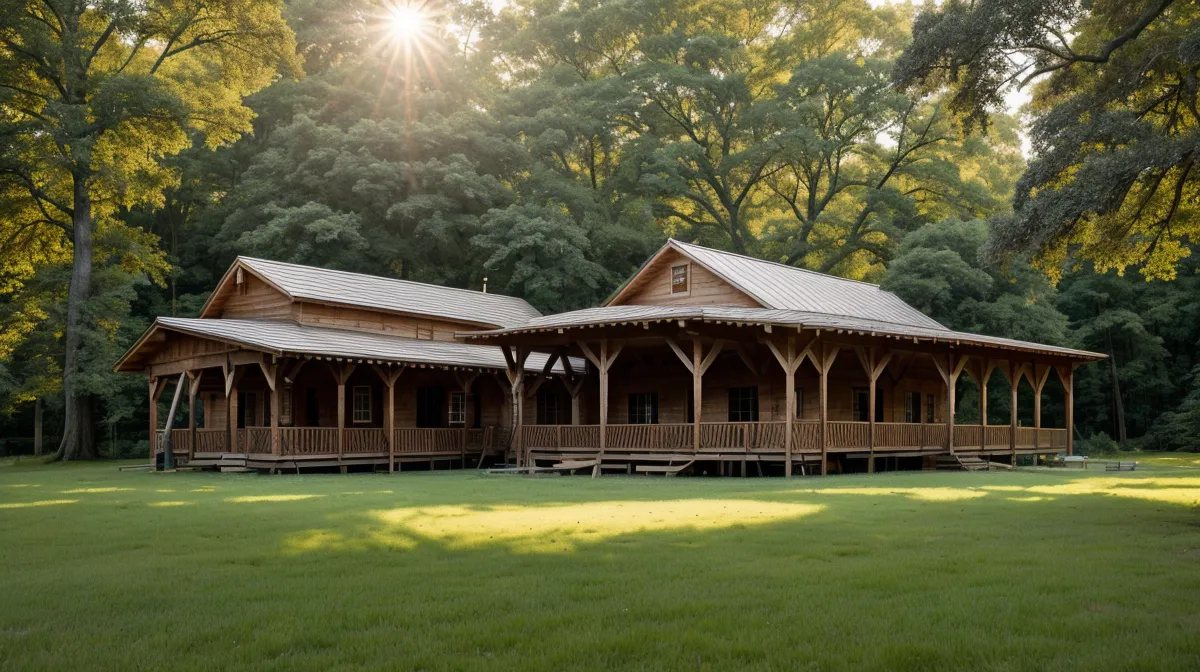
Both of us are on our knees at the edge of the pond, watching a fresh batch of mosquito larvae twitch near a surface that hasn't moved in days. Fifty feet of red clay separates that water from the nearest outdoor outlet, and neither of us has any interest in trenching through it. A solar-powered pump felt like the obvious fix for a backyard pond that badly needed some circulation — until we actually sat down and compared which kind of solar setup made sense.
Two paths sat in front of us, and this is really a story about weighing them against each other rather than a straight how-to. Run a dedicated AC line underground to an outlet near the pond, or skip the digging entirely and let an off-grid solar rig handle it instead. We'd already fought rocky clay with a shovel on our French drain project to fix a soggy stretch of the yard, so we had a pretty good idea how much a trenched line would cost us in time and blisters.
Why Rule Out Trenching an AC Line?
The math didn't favor it. Renting a trencher for an afternoon, buying enough weatherproof conduit to bury fifty feet of cable, and possibly paying an electrician to tie the run into our panel would have added up to more than the pump itself. None of that gets easier in clay that turns to brick in a dry spell and soup after a storm — the same clay we slog through on the trails at Haw River State Park most weekends. A solar setup, by contrast, never touches the house's electrical panel. No inspection, no permit conversation, just a pump, a panel, and some cable to hide under rock.
Sizing the Solar Pump: Turnover Rate, Head Height, and Watts
Before buying anything, we worked from actual numbers instead of guessing at pump size. Most pond pros recommend a pond turn over its full volume at least once an hour — a 300-gallon pond needs a pump moving 300 gallons every sixty minutes, or you're just stirring stagnant water instead of clearing it. We also wanted an IP68 rating, since that's the bar for equipment that lives underwater full time and never gets to dry out.
Head height mattered just as much as flow. That's the vertical distance a pump can push water before it stalls, and our little waterfall sits about three feet above the pond surface — except the pipe bends twice on the way up, and every bend adds friction the pump has to fight. We landed on a pump rated for 7 feet of head height so the top of the waterfall actually splashed instead of dribbled, paired with a 20-watt panel small enough to stay out of the way but strong enough to keep the pump moving through the hazy, overcast afternoons we get most of June.
Chasing the Sun Around a Growing Willow
Installing the pump itself was the easy half. Hiding the cable was the tedious part — both of us crawling along the pond edge, tucking black wire under heavy river rock so it disappeared instead of sitting there as a trip hazard. Dale next door lent us his flatbed to haul the rock over from the stone yard, on the usual understanding that we'd owe him one back eventually. Panel placement looked simple until it wasn't: I found a clearing that seemed to get sun all day and leveled the mounting post, figuring that was the hard part handled. Then a willow branch we hadn't been watching put on three feet of growth in a single month and started throwing a shadow across the panel by early afternoon. We moved the panel twice before it finally stuck.
Mounting that post is also where we made our one honestly avoidable mistake. We drove it in with a handful of drywall screws pulled from a leftover box, because they were sitting right there and four exterior screws didn't seem worth a separate trip. By the following winter every one of them had rusted through and bled orange streaks down the post. Ruben, a few doors down, noticed the stains when he stopped by to compare notes on the setup, and handed over a fistful of stainless screws from his own stash — he tends to buy fasteners by the box and never comes close to using half of them. Outdoor hardware, we learned, is not the place to grab whatever's closest.
Battery-Backed vs. Direct-Drive Solar: Weighing the Two Setups
Most all-in-one solar pond kits come bundled with a small control box and a lead-acid or lithium battery, so the fountain keeps running after dark. On paper that sounds like the better deal. Does stockpiling a part that's likely to fail early actually save you anything? Not in our experience — a battery baking in a backyard through July and August is a battery that dies within a season, and that's before you factor in the cost of replacing it. It's a little like buying the jumbo pack of something perishable because it's cheaper per unit: not much of a deal if half of it spoils before you get to it.
So we went direct-drive instead, the same logic plenty of solar DIY irrigation setups run on: let the sun set the schedule instead of fighting it. The pump only runs when the panel's actually catching light, which means it happens to run hardest exactly when an algae bloom is most likely to kick off — full sun, FULL flow, right when the pond needs it most. After dark, when the water cools and oxygen levels settle on their own, the pump just goes quiet. Fewer parts means fewer things that can fail, and for a system nobody's babysitting daily, that beats a fountain that trickles through the night.
If you like this kind of trade-off thinking for backyard upgrades, it's the same approach behind the DIY outdoor sectional sofa we built for the back deck — pick the sturdy, low-maintenance option over the flashier one, even when the flashier one photographs better.
Which Setup Actually Wins for a Backyard Pond?
Neither approach is wrong for every yard. Trench an AC line if the pond sits close to the house, if you want the fountain running at midnight for the sound of it, or if the site's shaded enough that a small panel can't keep up. Go solar and direct-drive if the pond is far from an outlet, if skipping the permit conversation sounds appealing, and if you can live with the pump resting at night the same way the pond does. For us, fifty feet of clay and zero interest in opening our breaker panel made that choice easy.
The first real test came on an afternoon when clouds had been rolling through since morning and the pump was barely coughing out water. Then the sky cleared, the panel caught full sun, and we heard the hiss of air clearing the line before a steady stream hit the rocks. It reminded me of the first hard rain after we finished the shed roof — standing at the door, watching water sheet off the edge while the tools inside stayed bone dry. Different project, same feeling: the thing you built is finally doing exactly what you built it to do.
No trenching, no batteries to replace, no bump on the power bill — just a pump working exactly as hard as the sun does, which for a backyard pond turns out to be plenty.